

Author: Chris Wood
There has been a general surprise that markets have not corrected more in recent months given the historic newsflow in the Middle East.
But that also means that the rally on the news of the MoU first signed digitally on 14 June between Vice President JD Vance and Iran’s Parliament Speaker Mohammad Bagher Ghalibaf has been more muted, save for the understandable decline in the oil price.
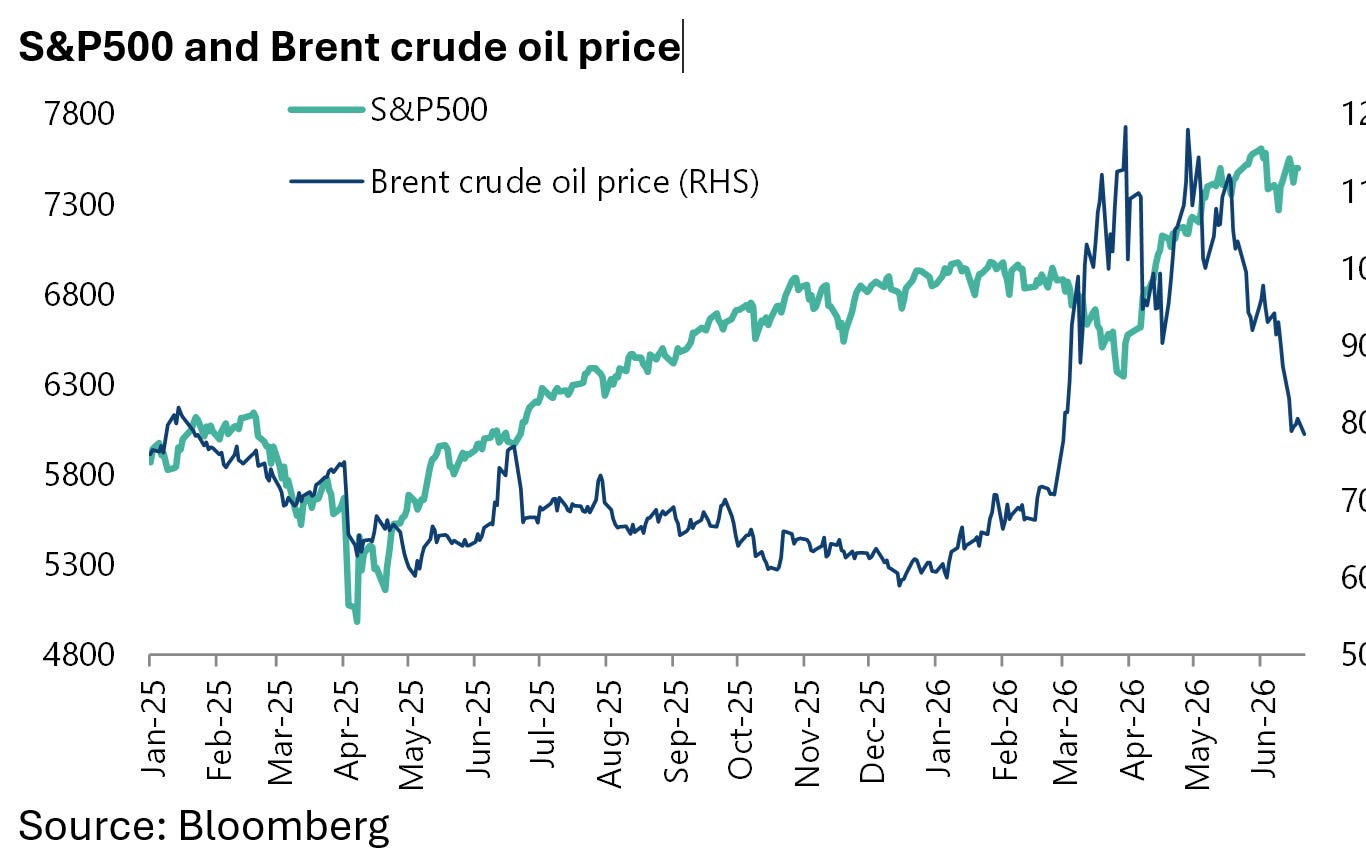
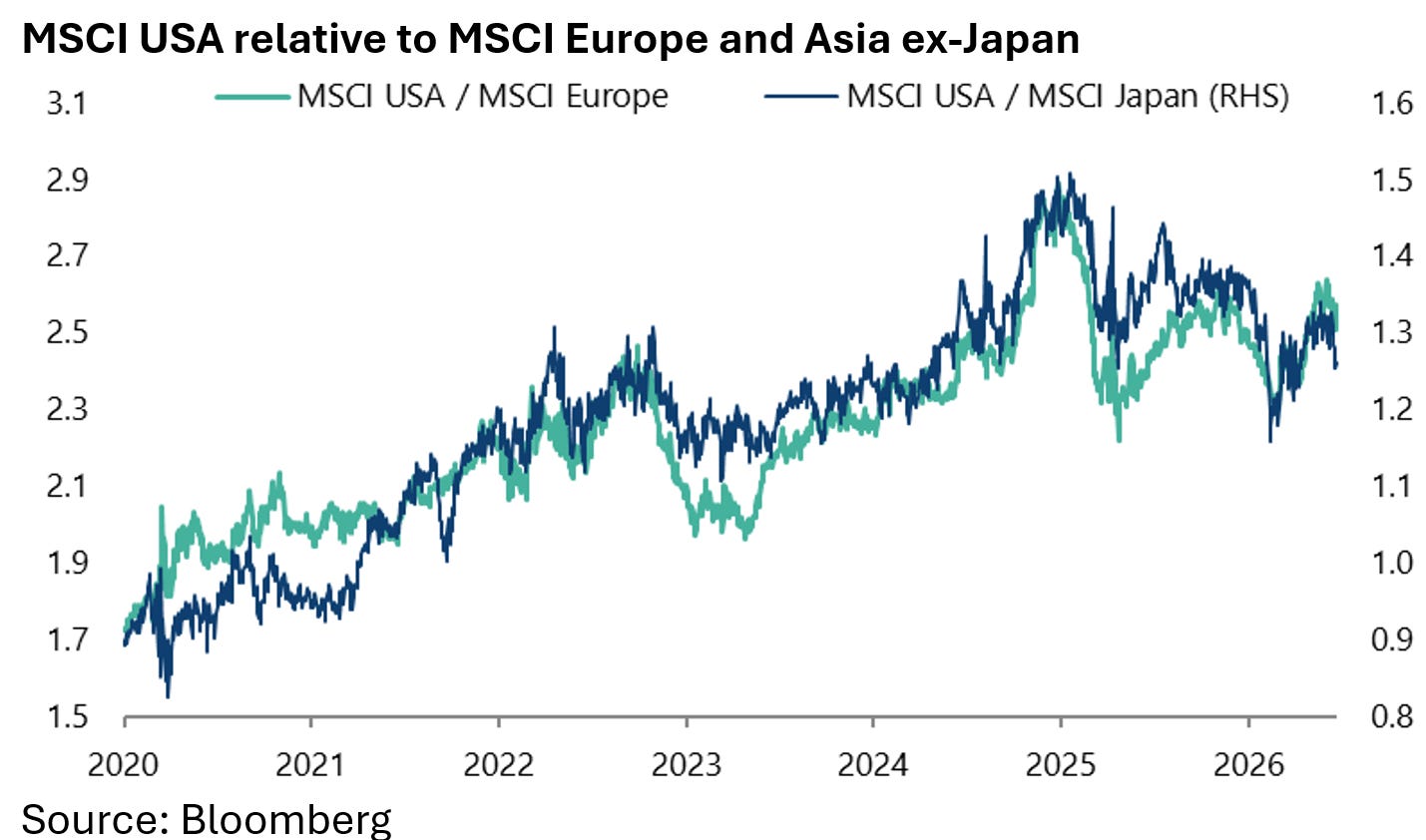
Still, if the ceasefire holds, which is a big if, it should lead to renewed outperformance of Europe and Japan over the US with a renewed emphasis on cyclical stocks.
What about the motivation for the deal itself?
Donald Trump was clearly desperate.
The master of the art of the deal has succumbed to what looks like almost a total capitulation after no less than 38 U-turns in recent months in terms of threatening death and destruction on Iran only to reverse course hours later with the latest twist and turn taking place on 12 June.
The key reason for Trump’s desperation to do this deal, in this writer’s view, has been continuing disastrous polling five months ahead of the November mid-term elections.
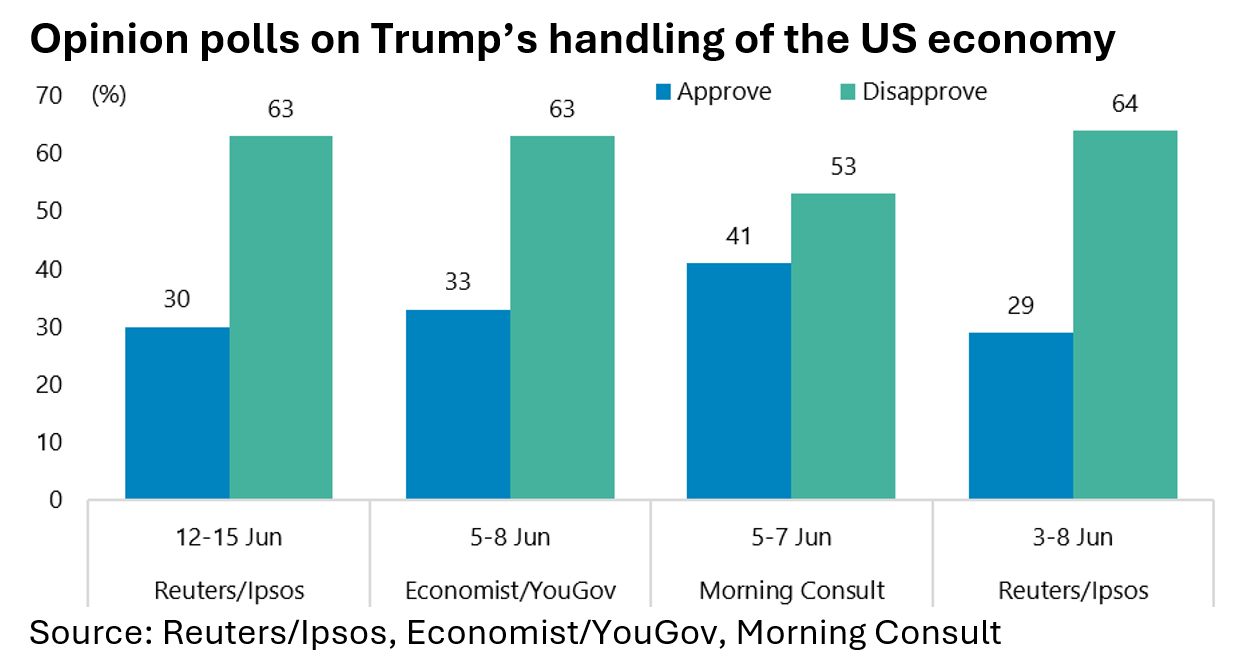
The Donald’s disapproval rating has been running almost as high as Richard Nixon’s during the worst period of Watergate, while his approval rating for managing the economy remains similarly low in spite of a booming stock market.
The latest Reuters/Ipsos poll conducted between 12-15 June put Trump’s disapproval rating at 62%, though down from 63% the previous week.
This compares with the 66% disapproval rating for Nixon back in early August 1974, a few days before his resignation, according to historical Gallup polls.
The latest Reuters/Ipsos poll also shows that 63% of Americans disapprove of Trump’s handling of the economy, compared with only a 30% approval rating.
The damage done to the Trump presidency by the decision to agree to the pressure from Israeli Prime Minister Benjamin Netanyahu to launch a joint US-Israel attack on Iran is, therefore, clear.
Indeed the blow to US credibility is also real with comparisons to Britain’s Suez Crisis in 1956 not so far-fetched.
China’s Commoditization of AI Models
Meanwhile if the geopolitical risks raised by the Iran issue are real, the US stock market is currently all about celebrating in the short term the continuing AI capex arms race, while in the medium term the critical issue remains whether the hyperscalers, and related parties, will be able to make a reasonable return on their massive investments.
This writer remains highly sceptical.
Indeed the base case is massive capital destruction, which is why the best AI trade has always been owning the picks and shovels plays such as the DRAM stocks.
Meanwhile, China remains a formidable competitor to the US on AI.
This writer was in the China capital a few months ago and had an opportunity to read a physical copy of the China Daily.
There was one article which particularly caught the attention, in part because it reconfirmed another base case, namely that China is on course to win the AI arms race both because of its open source approach to large language models as well as its overwhelming advantage in terms of having access to cheap power.
The article, with the provocative title “Chinese tokens ‘crush’ foreign competitors”, focused on how China is packaging its massive reserves of cheap electricity and computing power to process tokens – remember that “tokens” have become the unit measuring demand in the brave new AI world (see China Daily article: “Chinese tokens ‘crush’ foreign competitors” by Cheng Yu, 14 March 2026).
The result is a surge in what the article refers to as “token exports”.
It highlighted how in a “watershed moment”, Chinese AI models processed 4.12tn tokens on the global aggregator platform OpenRouter in the week ended 15 February, surpassing US models’ 2.94tn for the first time, based on the weekly usage of the top nine models on OpenRouter.
The figure has since risen to 21.37tn tokens for the top Chinese AI models in the week ended 21 June, compared with 5.76tn tokens for the top US models.
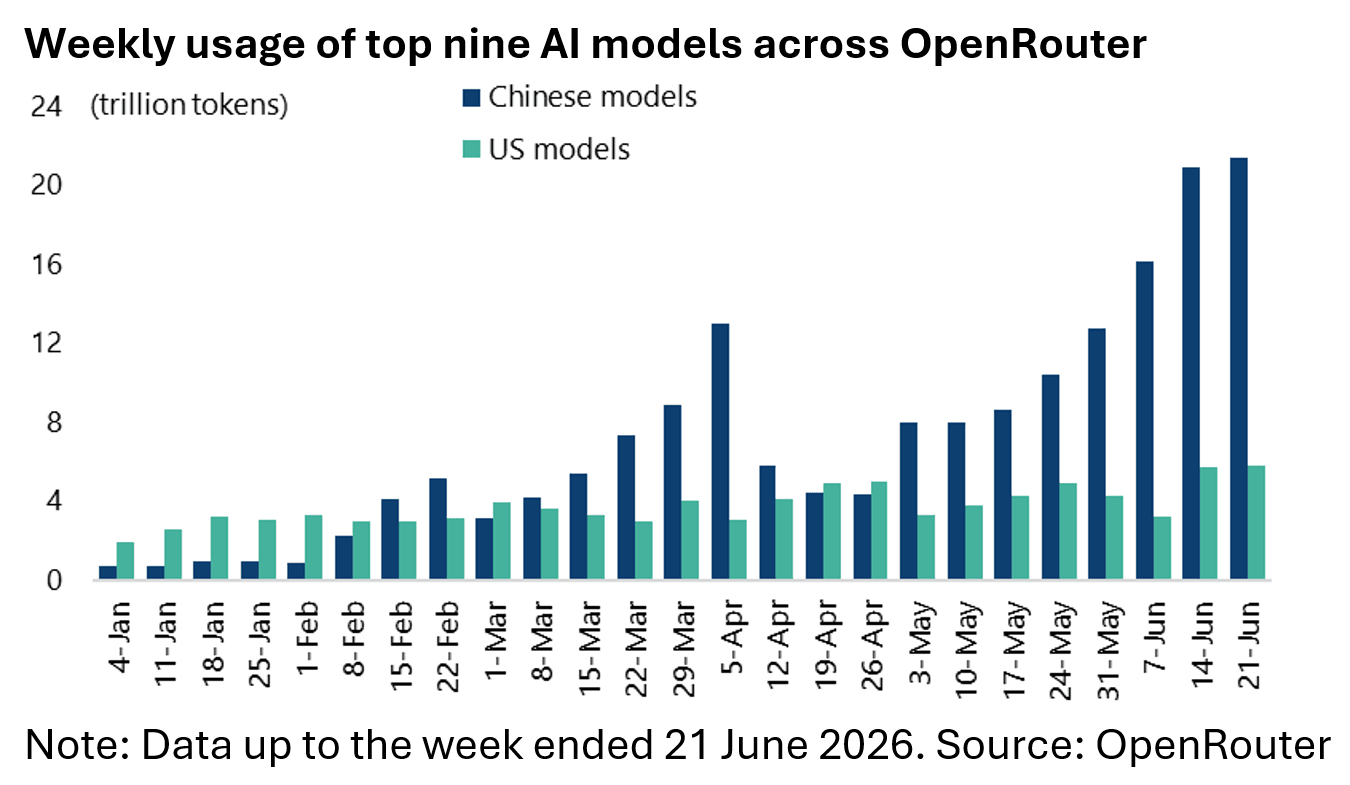
Yet US users reportedly make up nearly half of the platform’s base.
As a result, exporting tokens has “quietly” become China’s most efficient value-added energy trade as the country exploits the advantage of its access to almost unlimited cheap electricity, in terms of the dramatic improvement in battery storage technology which has meant that solar has become cheaper than coal in China even before the increased coal price triggered by the Iran conflict, as discussed here previously (see China’s Energy Endgame: Is Battery Storage Making LNG and Nuclear Obsolete?, 13 March 2026).
On this point, Beijing included “computing-electricity synergy” (算电协同) as a national priority in its 2026 Government Work Report at the National People’s Congress in March, which means in reality leveraging its energy infrastructure to build a strategic moat for the digital economy.
Meanwhile, in terms of the cost advantage, the above referenced China Daily article noted that raw power in China sells for roughly Rmb 0.5 per kilowatt-hour if exported.
Converting that same electricity into AI computing power and selling it as tokens yields an estimated 22-fold increase in value.
China’s Energy Advantage is Forecast to Grow
Meanwhile, the remarkable scaling up of electricity generation is not over even though China has massively increased its power generation capacity relative to the US in recent years as also discussed here previously (see China’s Energy Endgame: Is Battery Storage Making LNG and Nuclear Obsolete?, 13 March 2026) and shown again in the charts below.
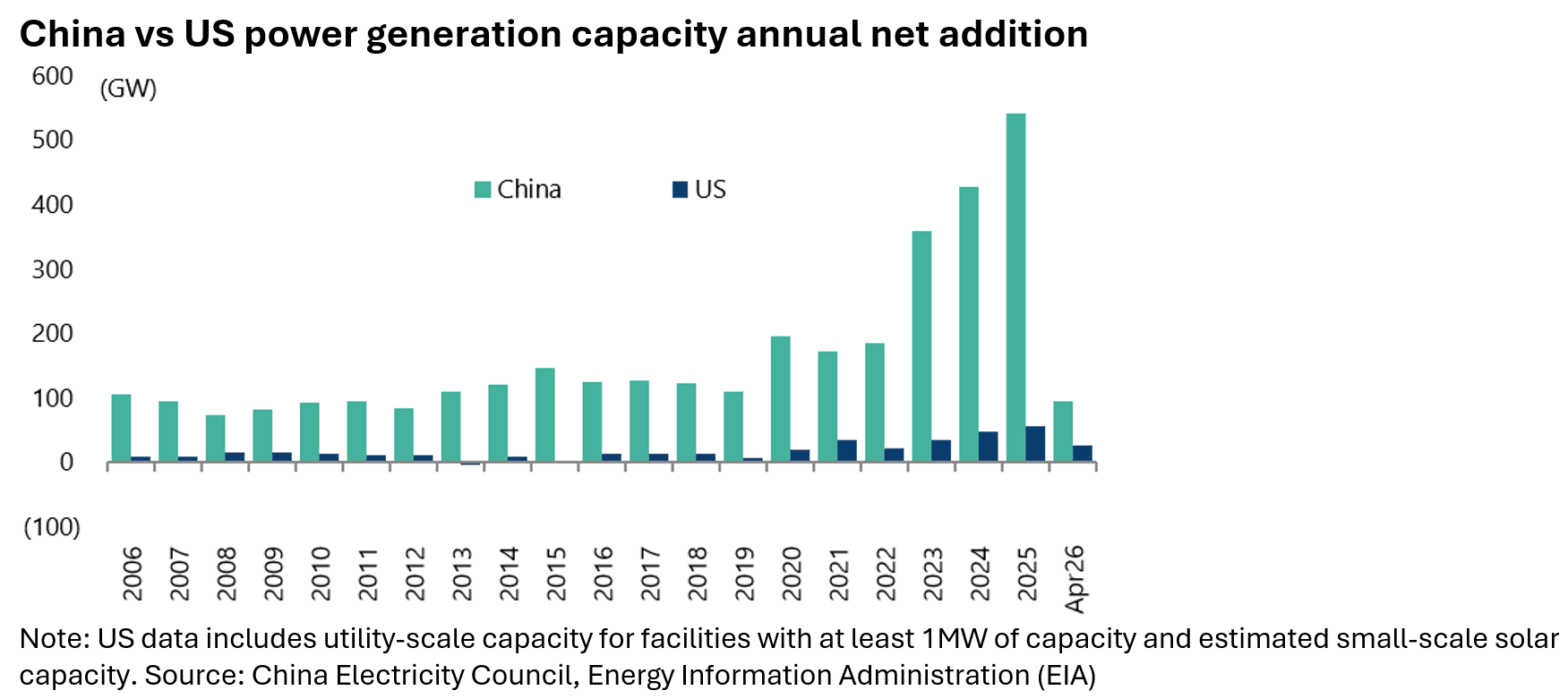
This writer heard an estimate in Beijing that the cost of electricity will decline to one-third of the current level in ten years as the access to solar is further ramped up.
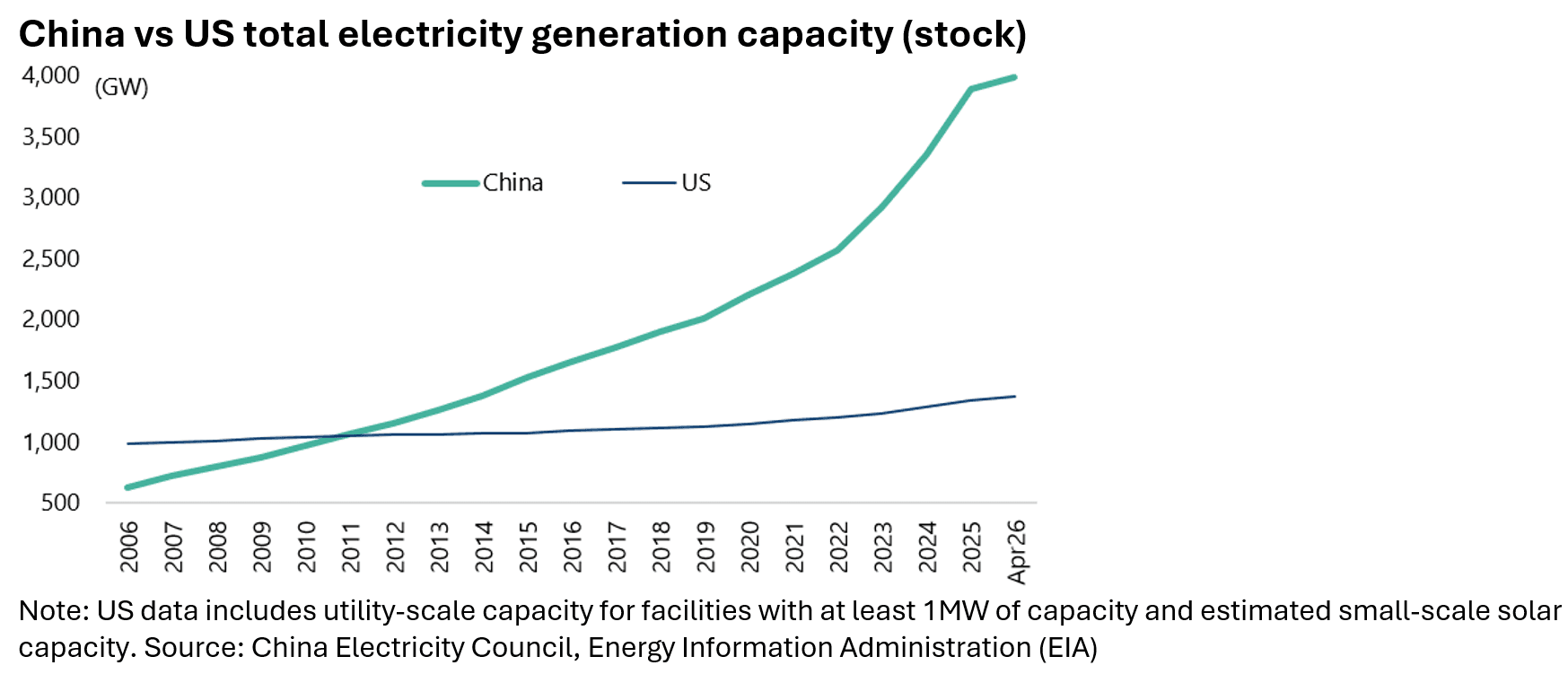
All of the above is why it is correct to say that China has secured energy dominance in a global context.
For paid subscribers we dive deeper into the financials of China’s largest upcoming memory producer IPO and what memory capacity expansion out of China could mean for the outsized profits currently generated by the memory cabal (Samsung, SK Hynix and Micron)