
The Memorandum of Misunderstanding

Author: Chris Wood
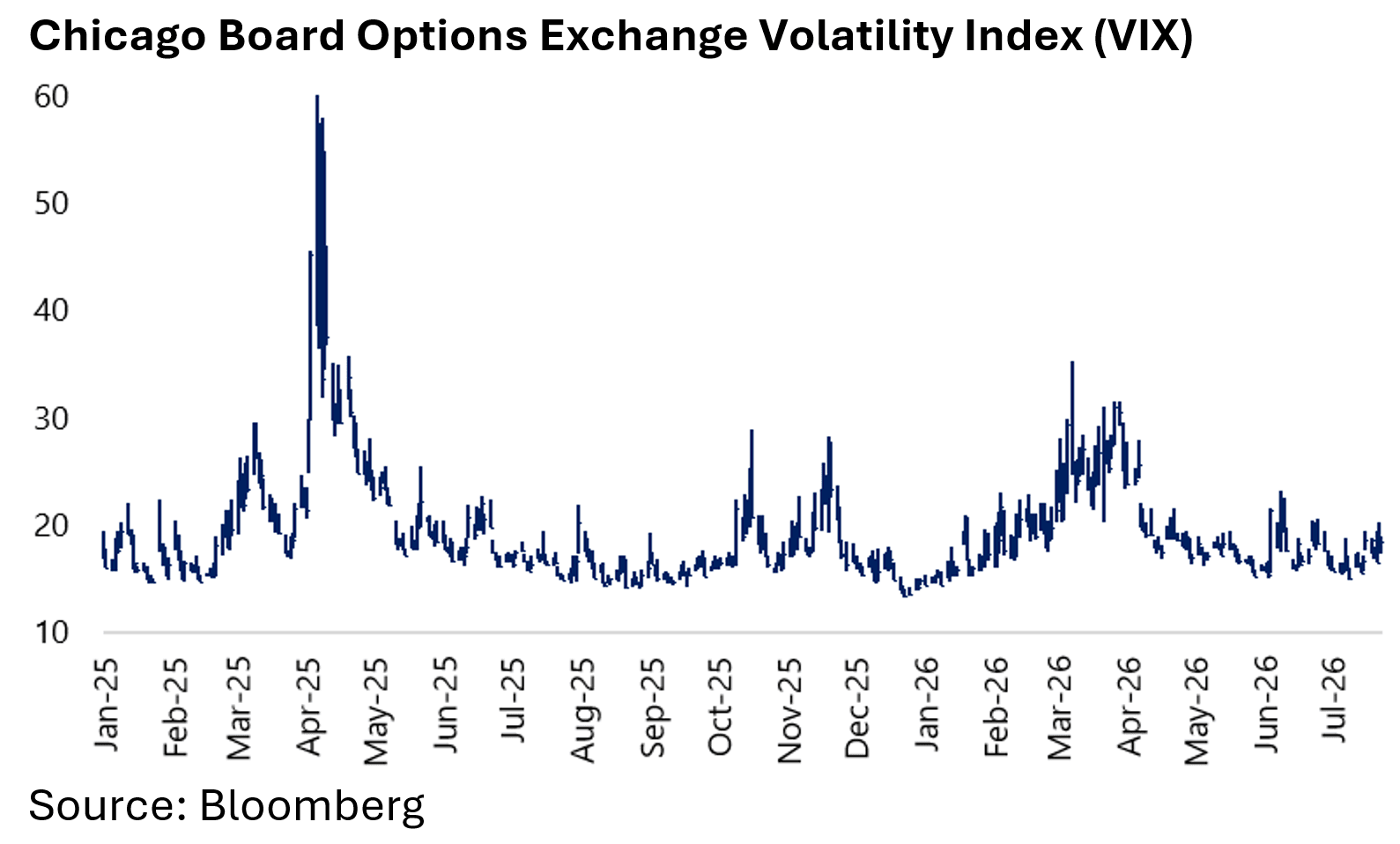
It remains surprising the degree to which markets have remained calm since the original US-Israel attack on Iran on 28 February.
The VIX has peaked at only 35.3 so far in this Iran-war-triggered cycle, compared with a peak of 60.1 following the tariff announcement in April last year, and is now 18.6.
Still, the risk of renewed Iran-triggered market turmoil is clearly rising though experience has shown that yet another Trump U-turn can happen at any time.
In that respect, wags have called it the Memorandum of Misunderstanding.
But that assumes the 47th president actually read the 14-point MoU signed by the US and Iran on 17 June.
This writer severely doubts that.
Donald Trump actually signed it during a dinner with French President Emmanuel Macron at the Palace of Versailles.
What is clear is that outright conflict has resumed between the US and Iran of late and that Donald Trump, the man who got elected on the “no more wars” agenda, is in a trap of his own making in the sense that this writer’s base case is that Iran will be able to keep the Strait essentially closed and that time is on its side in terms of the growing impact of energy-related shortages.
Meanwhile, those on the Iranian side who favoured negotiations will have been discredited since the terms of the MoU were never honoured from almost the start of the supposed 60-day negotiation period.
On the issue of the Strait itself, the MoU states that Iran will “make arrangements using its best efforts for the safe passage of commercial vessels, with no charge for 60 days only”.
For this reason, this writer hears that real control in Iran is now firmly in the grip of Ahmad Vahidi, the Commander-in-Chief of the Islamic Revolutionary Guard Corps (IRGC), in terms of the management of the Strait of Hormuz and the related military strategy.
By contrast, the position of Iranian President Masoud Pezeshkian will have been further weakened.
Iran’s Reprisals are a Signal to Gulf States
Meanwhile the Iran response in terms of its renewed attacks on US bases in the Gulf, in response to the 13 consecutive nights of US attacks on Iran before they stopped on 24 July, is sending the message to the Gulf states that the “you are either with us or against us” in terms of allowing US military bases to operate in their countries.
In this respect, the Tehran agenda is increasingly clear.
That is that it wants the US presence out of the region.
Whereas for the Gulf states themselves, they must increasingly be asking themselves what exactly the US security guarantee is getting them in the sense that they are being attacked almost because of that presence.
In this respect, there has been an interesting divergence of late between the stance of Saudi Arabia and the UAE.
Most importantly, Riyadh has not allowed its territory to be used for the latest US strikes. Saudi’s strategic position had also been improved by the fact that it has been using its East-West pipeline to Yanbu on the Red Sea.
But that is no longer the case as the Houthis are now blocking Saudi ships’ access to the Red Sea.
This writer will not get further into the details of Middle East politics, save to note that they are fiendishly complicated.
This is why negotiations should be delegated to professionals in America’s diplomatic corps which is certainly not the approach of the Trump administration which has essentially been flying blind.
Recent US Bombings Directly Attacked China’s Interests
Meanwhile, it should be noted that the renewed American attacks have involved one major escalation which has directly attacked China’s interest.
This is because the US badly damaged Aq Tekeh Khan Railway Bridge in Aqqala in northern Iran which is part of the railroad linking Tehran to Xi’an in Western China via Central Asia which became operational in May 2025.
The important point to note is that, aside from its logistical importance, this railway was built and financed by China. The other major American escalation was the bombing of the port of Chabahar.
This is about 300 miles from the Strait of Hormuz and is on the Gulf of Oman only 62 miles from the Pakistani border.
All of the above must be distressing to the Pakistani negotiators who spent so much time in negotiating the original MoU.
This is why the official line is that the MoU is “suspended rather than irretrievably extinguished”.
But this writer has a very hard time believing in that outcome.
Clearly, the Donald can do a U-turn at any time, and indeed is very likely to do so.
But that is not a reason for the other side to commit to renewed negotiations given the by-now chronic loss of trust.
How Has the Market Shrugged off Iran?
Below we dig into the two key reasons the market has been able to shrug off the Iran conflict and the energy supply uncertainty (Hint: AI to the rescue).
We also look at valuations of the Nvidia plus the four largest hyperscalers to see if price underperformance in 2026 is a buying opportunity, or a sign of rising risks to the AI trade as a whole.