
Gold Producers: The Case Against Indexing
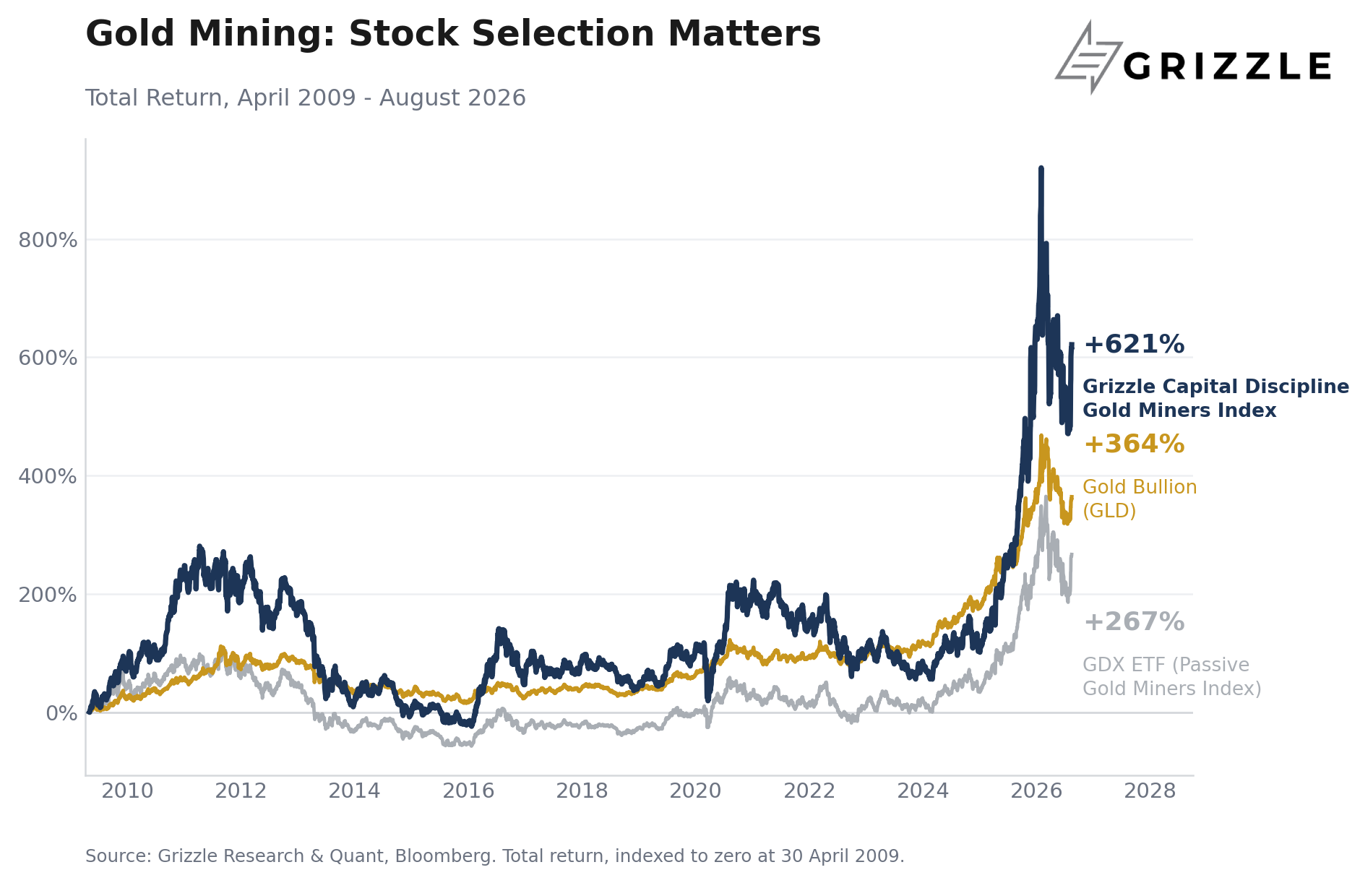
Grizzle Capital Discipline Gold Miners Index vs. GDX ETF: 621% vs. 267% since 2009

The Backdrop
The setup for gold and gold equities has significantly improved over the last two weeks.
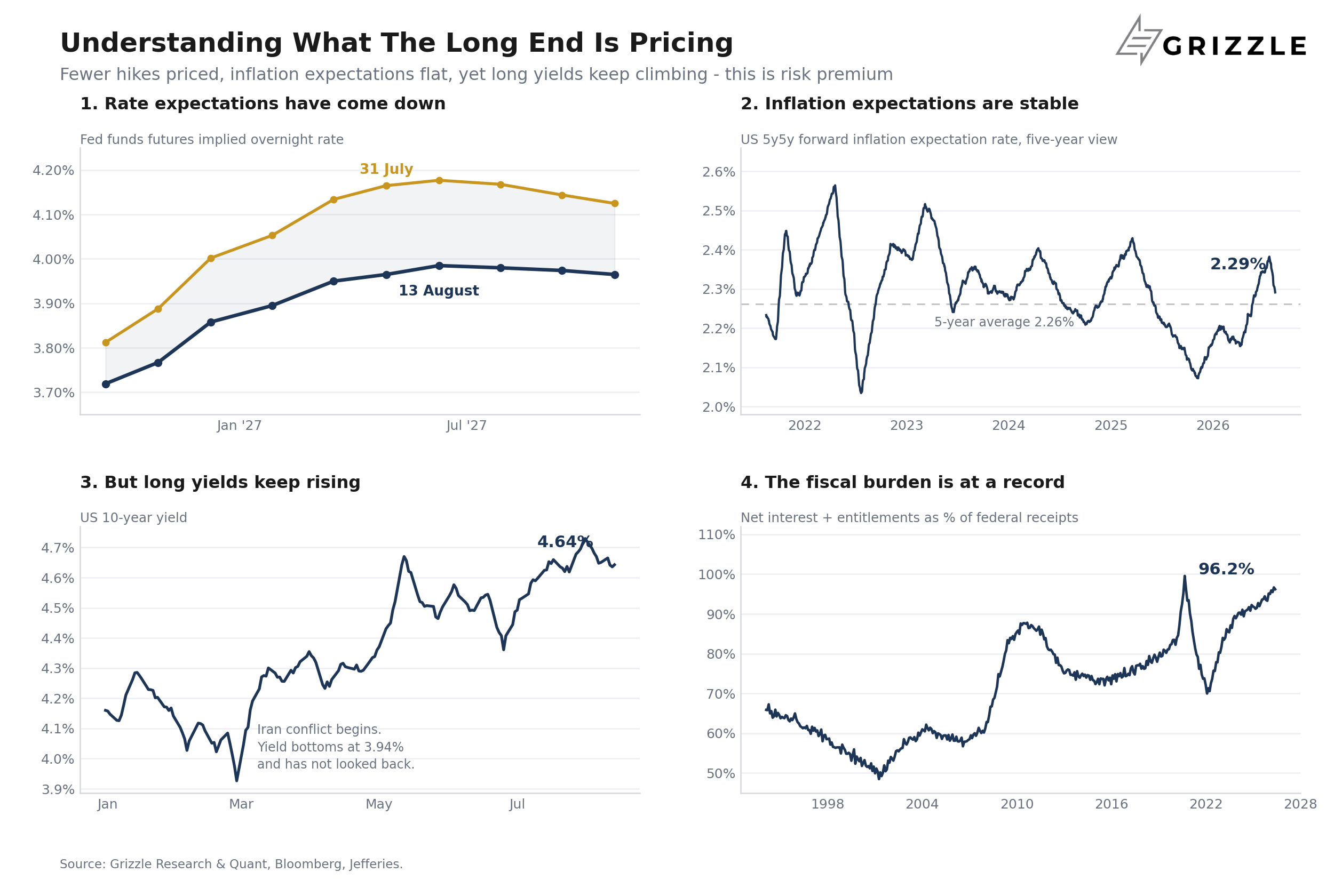
Rate expectations have fallen, with a September hike priced in at 72% on July 31st - the July payroll miss and in-line CPI print have since flipped the market to expecting a hold.
Inflation expectations remain stable, with the 5y5y forward inflation expectation at 2.29%, inline with the 5-year average.
However long yields have continued to march higher, with the 10-year at 4.64% (it was 3.94% in late Feb, pre-Iran), and the 30-year sits at 5.21%. The market is demanding a higher risk premium - pricing in the reality of a stretched US balance sheet (war + uncontrolled spending).
This is the functional reason to be long gold in your portfolio, a guard against runaway government spending.
Gold Equities have Torque vs Gold Bullion (with a Caveat)
Gold producers clearly have a tailwind in this backdrop, but this is far from a blanket statement for the industry as a whole.
The miners have a long and well documented propensity to disappoint. That has been the central theme of the industry for the last 30 years; weak capital discipline, cost inflation, declining reserve grades and value destroying M&A. The list is long and it’s the reason why the default for investors is to own gold bullion (GLD ETF) over the miners.
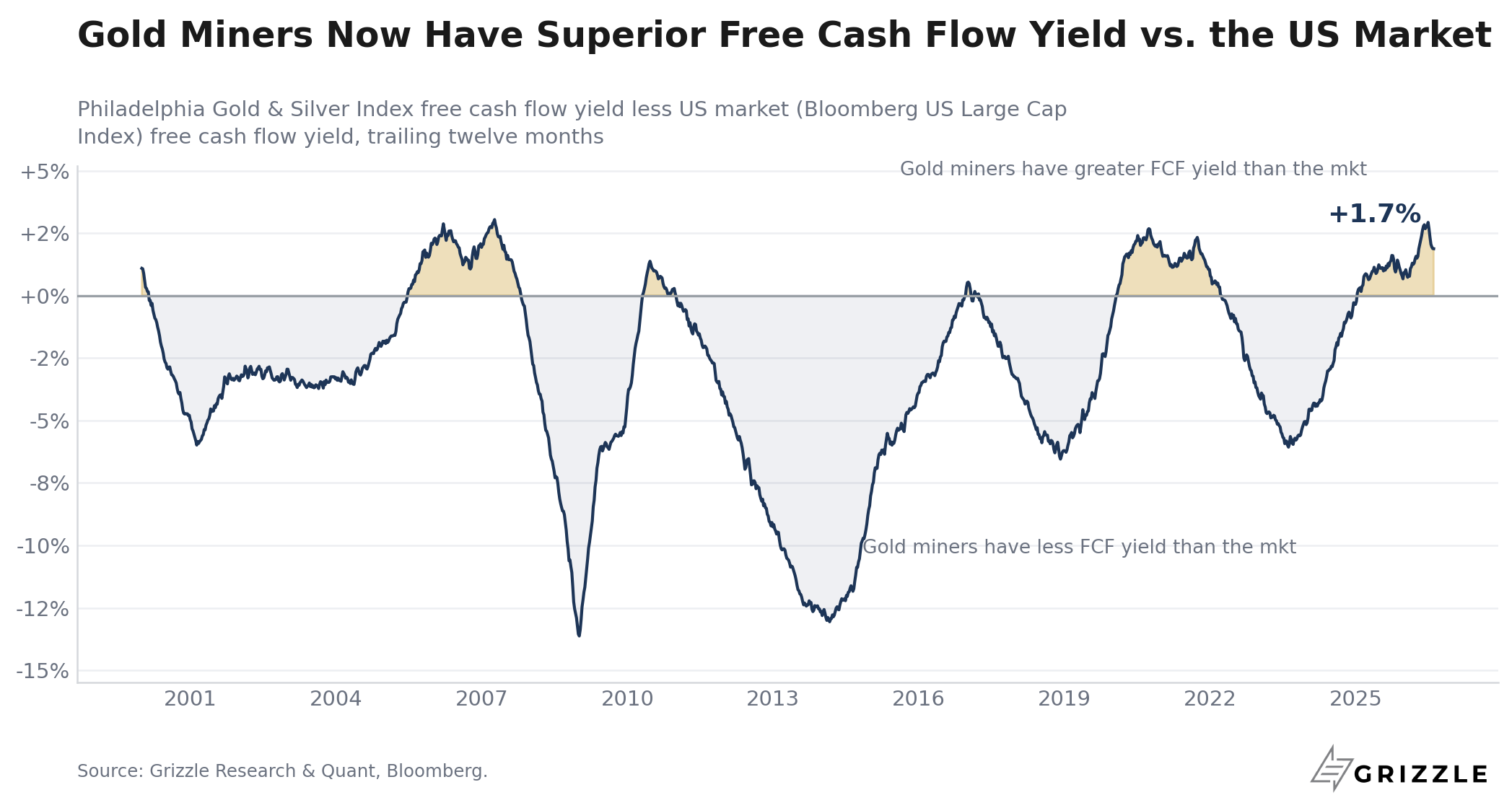
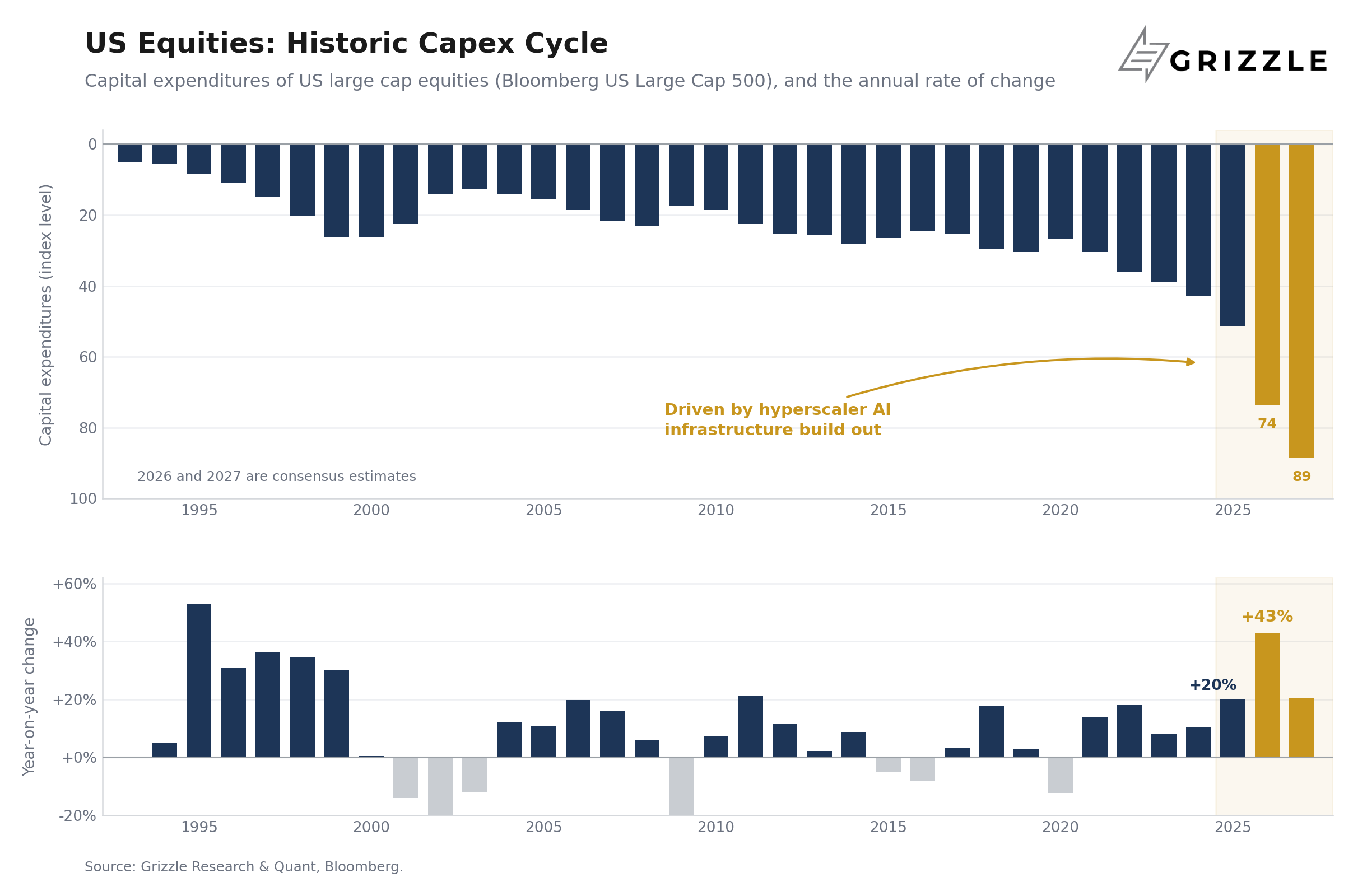
However, an important dynamic has emerged that tilts the odds meaningfully towards gold equities - specifically the free cash flow yield (trailing 12m) for gold miners is now higher than the US market. This reflects two forces moving in opposite directions: 1. miners have embraced capital discipline and thus a focus on cash flow generation, and 2. the US market has far less free cash flow on the back of historic capital spending for AI infrastructure.
The spread is widening from both sides at once, a first in recent history. US large cap capex rose 20% in 2025 and is forecast to rise a further 43% this year.
Passive Investing in Gold Miners is a Problematic Strategy
The ETF-ication of the market has transformed commodity equity investing into an indexing exercise. Prior to this market change, capital allocation was set by active mining specialists and fund managers who understood the assets and the industry. Today the VanEck Gold Miners ETF (GDX) controls the flow. When a portfolio manager or a wealth advisor decides to own gold equities, they buy the GDX or GDXJ (gold juniors) ETFs.
These passive (market cap weighted) commodity equity ETFs are problematic for investors seeking alpha, the main reason is that the largest gold companies are among the worst offenders on the exact issues that have challenged the industry historically. Market cap weighting does not screen for capital discipline. An investor ends up being overweight the exact names they would least want to own.
Size compounds the problem, the majors face a genuinely difficult task replacing reserves and growing production - which leaves two levers to grow cash flow: a higher gold price (out of their hands) or cost reduction. Mid-caps and smaller producers are not constrained in the same way, they can grow production and cost profiles are much more manageable.
The cost of the poor portfolio construction shows up in the historic returns, since April 2009 the GDX has returned 267% vs 364% for bullion. This is why the GLD has become the default asset allocation choice for investors wanting gold exposure, why take the risk on a chronically underperforming sector? When you screen that same gold mining universe for capital discipline and cash generation the outcome inverts: the Grizzle Capital Discipline Gold Miners Index returned 621% over the same period - significantly outperforming passive (GDX) and bullion (GLD). This is the core reason investors should want to own the right gold miners over bullion: the inherent leverage to gold prices within the business.
Below we work through four screens, each testing a different factors that highlights value and capital discipline. We show which names stand out on each, where the screens agree and then highlight 3 of the names in greater detail.
This quantitative framework is an excellent starting point for gold mining investors, 17 years of data confirm that this is the pond to fish in. The alternative is favoring an index that is inherently handicapped from owning the attributes that predicate outperformance.